Key Takeaways
- A telemetry transceiver combines transmit and receive functions to stream measurement data wirelessly from aircraft, missiles, or UAVs to a ground station
- Flight test programs depend on IRIG 106-compliant transceivers for validated, interoperable RF data links
- Sourcing from a specialist manufacturer reduces integration risk and lead time versus general RF distributors
- Top suppliers include Lumistar, Quasonix, Curtiss-Wright, Safran Data Systems, and L3Harris
- Key sourcing criteria: IRIG 106 compliance, RF band coverage, SWaP envelope, and in-stock inventory depth
What Is a Telemetry Transceiver?
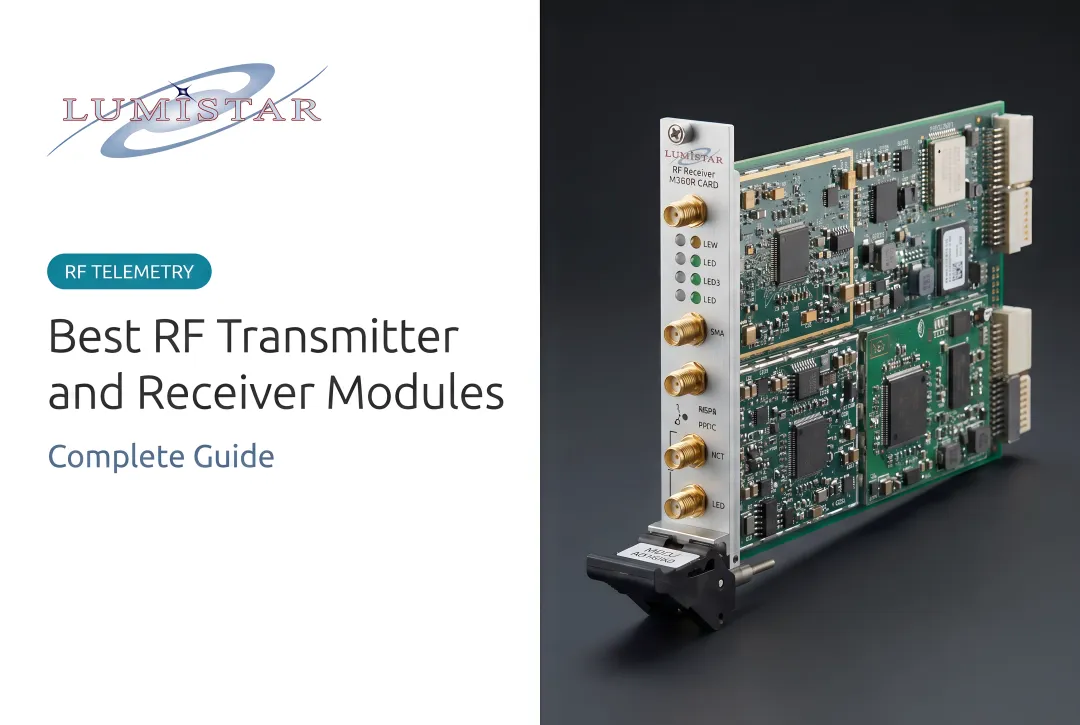
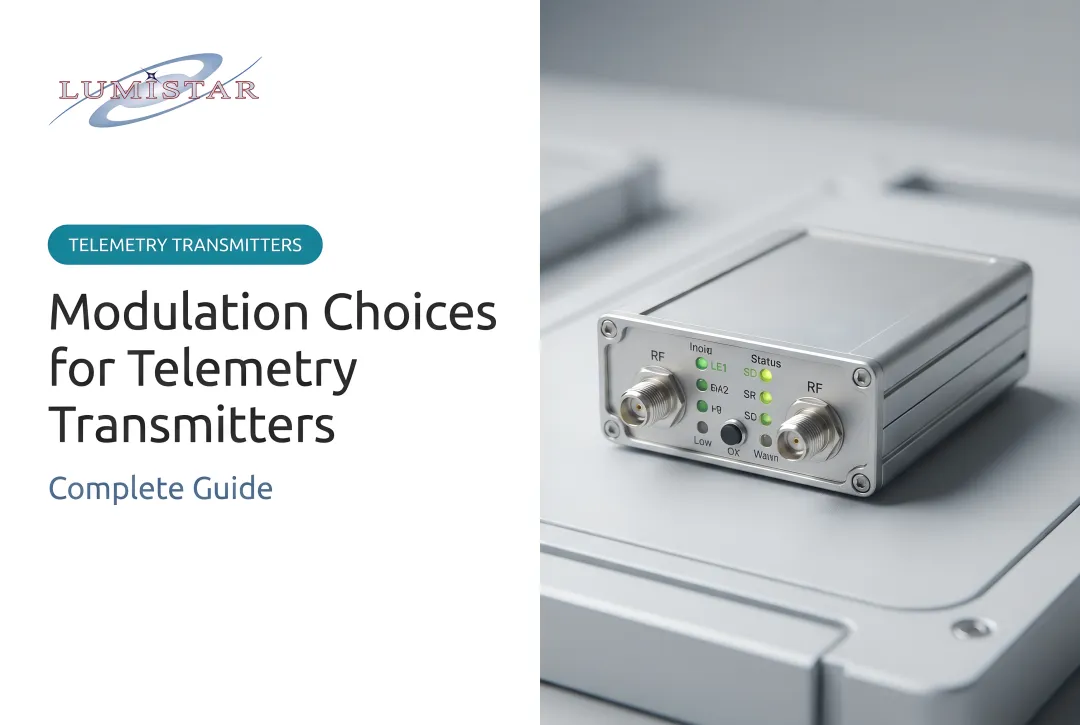
The word "telemetry" comes from the Greek tele (far) and metron (measure). A telemetry transceiver combines a transmitter and receiver into one unit: it collects measurement data from a remote platform, wirelessly relays it to a ground station, and receives commands back.
The Real-World Version
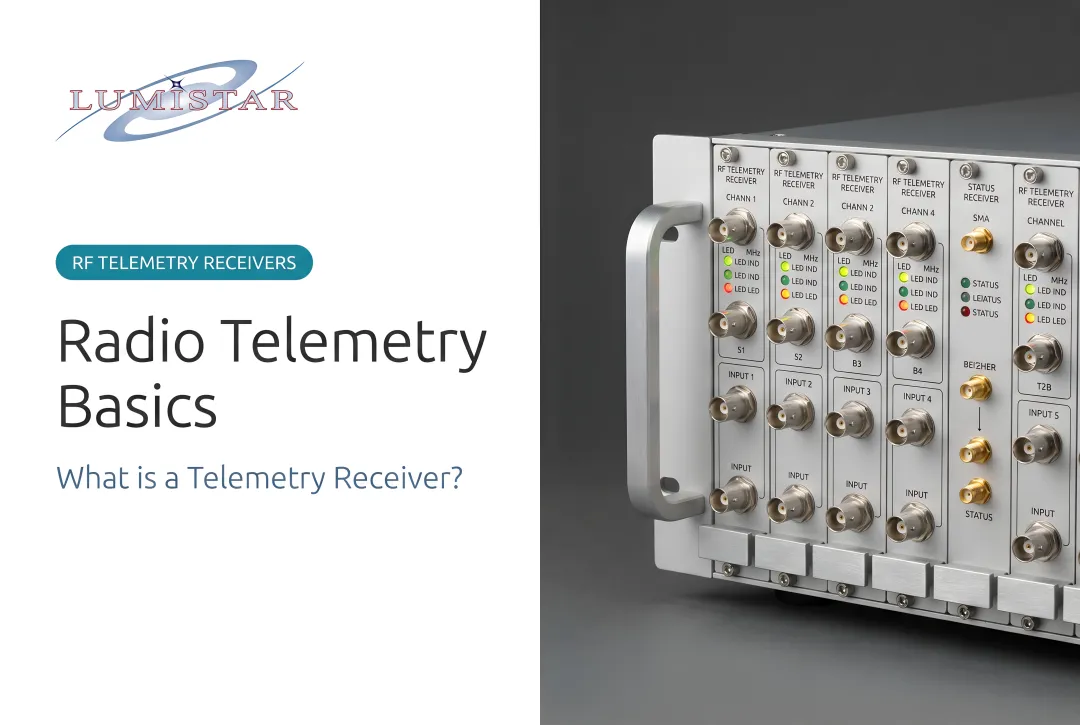
In aeronautical flight test, aircraft, missiles, and UAVs carry onboard telemetry systems that stream performance data in real time during a test event. The transceiver is the RF link that makes this possible. At US military and federal test ranges, these systems must align with IRIG 106, the interoperability standard maintained by the Range Commanders Council Telemetry Group. It governs modulation, frequency allocation, and data formatting requirements.
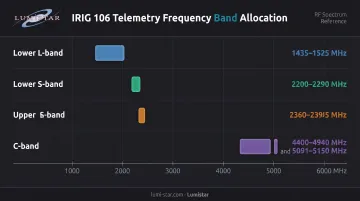
Key frequency bands under IRIG 106 include:
- Lower L-band: 1435–1525 MHz
- Lower S-band: 2200–2290 MHz
- Upper S-band: 2360–2395 MHz
- C-band: 4400–4940 MHz and 5091–5150 MHz
The In-Game Version
Arc Raiders borrows the name and concept from real aerospace hardware — then drops it into a post-apocalyptic loot economy. In the game, the Telemetry Transceiver is an Exodus-class material item with no direct crafting recipe, but its recycling value makes it one of the more useful items you can pull from a drawer.
Best Places to Farm Telemetry Transceivers in Arc Raiders
Critical first point: Telemetry Transceivers only spawn on the Stella Montis map. Drop anywhere else and you won't find one. Plan your loadout and extraction route accordingly before queuing.
Assembly and Assembly Workshops
This is the single best farming location on the map. The Workshops carry an elevated drop rate for Rare and Epic-tier loot, and the north-side rooms are where the best containers cluster. Focus on white and blue drawers — they yield Exodus-class materials at a higher rate than other container types.
One significant complication: Assembly is a high-traffic PvP zone. Other players know what's here. The moment you drop, move to the Workshops fast. If you're slow, the drawers will already be cleared.
Medical
Medical sits just south of Assembly and spans two floors with multiple lab rooms. White drawers and containers here reliably produce Rare-tier Exodus materials, including the Telemetry Transceiver. It's a solid secondary option if Assembly has already been cleaned out.
The tradeoff is enemy density. Shredder units patrol the confined corridors, and the tight room geometry makes them harder to avoid than in more open areas. Clear carefully or move quickly — don't try to do both at half-speed.
Lobby
The Lobby is a third-tier option, not a dedicated farming route. The eastern stairwell has side rooms on the second and third floors with long black boxes and desks that occasionally yield Telemetry Transceivers. Worth a sweep if you're passing through.
Don't linger. The Lobby connects multiple areas of the map, which makes it a constant PvP corridor. Treat it as a quick check, not a farm.
Why It's Worth Picking Up Regardless
Even if you don't need Telemetry Transceivers for a specific recipe, the recycle value justifies looting them:
- 1 Advanced Electrical Component — required for crafting the Raider Hatch Key (1 AEC + 3 Sensors)
- 1 Processor — required for the Trigger 'Nade (1 Processor + 2 Crude Explosives), one of the strongest PvP throwables in the game
Both outputs are consistently useful. If your storage is stocked on one, you'll almost certainly need the other.
Best Real-World Telemetry Transceiver Suppliers
The following suppliers are established providers of flight-test-grade telemetry hardware, evaluated on technical capability, IRIG 106 compliance, product breadth, and support infrastructure.
Lumistar, Inc.
Founded in 2000 by a group of experienced telemetry engineers, Lumistar is a San Marcos, California-based company operating exclusively in the aeronautical and aerospace flight test market. All products are designed and manufactured in the USA.
The team carries over 100 years of combined engineering experience and has achieved significant miniaturization results — reducing typical ground station configurations from 8-foot, 250 kg rack systems to sub-1 kg handheld units drawing under 50 watts.
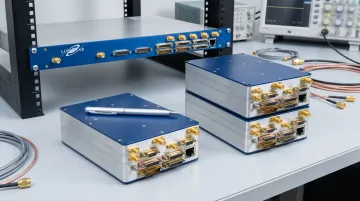
The LS-28-DRSM series is the flagship product line: a modular, firmware-based receiver/combiner/processing system available in portable (IP-67 rated), modular brick, and rack-mount configurations. It covers 200 MHz to 6 GHz, supports data rates up to 60 Mbps, and delivers "RF to Ethernet" capability via IRIG-218-compliant Chapter 10 UDP streaming.
| Feature | Detail |
|---|---|
| Key Products | LS-28-DRSM series (modular/portable/rack), LS-26 airborne receiver, LS-35-R IF receiver/combiner, LS-29-R2 RF recording system |
| RF Coverage | 200 MHz to 6 GHz (L, S, C, NATO E-band, P-band) |
| Max Data Rate | 60 Mbps |
| Compliance | IRIG 106 Ch 4 Class I & II; IRIG-218; MIL-HDBK-217 MTBF |
| CAGE Code | 718V9 |
| Support | Unlimited post-delivery technical support; speak directly to an application engineer on first call |
| Contact | sales@lumistar.net / 760-431-2181 |
Quasonix
Founded in 2002 and headquartered in West Chester, Ohio, Quasonix was built specifically to serve the flight-test telemetry market. Their TIMTER transmitter covers L, S, and C bands (including multi-band L/S/C configurations), supports SOQPSK-TG and Multi-h CPM at standard rates up to 28 Mbps with options up to 46 Mbps, and is referenced in IRIG 106-17 Appendix 2-D for LDPC forward error correction adoption.
The RDMS rackmount receiver tunes 200 MHz to 5250 MHz in 1U or 3U chassis options. Quasonix also holds a 5-year, $21.7M Army telemetry transmitter contract.
| Feature | Detail |
|---|---|
| Key Products | TIMTER transmitter, nanoTX/nanoPuck, RDMS rackmount/compact receiver, HyperTrack antennas |
| RF Coverage | L-band (1435.5–1534.5 MHz), S-band (2200.5–2394.5 MHz), C-band (4400–4950 MHz) |
| Max Data Rate | 46 Mbps (SOQPSK/Multi-h CPM) |
| Compliance | ISO 9001:2015; IRIG 106-17 LDPC/STC |
Curtiss-Wright Defense Solutions
Curtiss-Wright is a global defense electronics integrator with a broad flight test instrumentation portfolio. Their RF telemetry lineup covers transmitters, receivers, transponders, and transceiver solutions across telemetry, digital, wideband, and video applications. The MATS (Modular Airborne Telemetry System) encodes sensors, transducers, and data bus sources into a wideband PCM output for airborne use.
The company supports IRIG-106 Chapter 10/11 and TmNS Chapters 21–26, and holds a $24M contract for F-35 Technology Refresh 3 flight test instrumentation at Nellis Air Force Base.
| Feature | Detail |
|---|---|
| Key Products | MATS airborne system, RF transmitters/receivers/transceivers, ground station hardware/software |
| Portfolio Scope | Data acquisition, telemetry, recording, switching, display, processing |
| Compliance | IRIG-106 Ch 10/11, TmNS Ch 21–26 |
| Notable Contract | $24M Nellis AFB F-35 TR3 flight test instrumentation |
Safran Data Systems (formerly Zodiac Data Systems)
Based in Courtaboeuf, France, Safran Data Systems operates within Safran Electronics & Defense and has more than 2,000 units deployed worldwide. The company serves both civil and military aerospace programs across European and international markets.
Their SDTX multi-band transmitter measures 3 × 2 × 0.85 inches and weighs 170 g — a compact airborne option covering L, S, and C bands up to 40 Mbps. The Cortex RTR ground receiver supports up to 4 channels in a 4U chassis under 25 kg, with C-band coverage to 5250 MHz and max rates of 60 Mbps (SOQPSK).
| Feature | Detail |
|---|---|
| Key Products | Cortex RTR/RTR-X1 receiver, SDTX transmitter, DTRDM transmitter, TM Maestro software |
| SDTX Specs | 170 g, 3×2×0.85 in, up to 40 Mbps, L/S/C band |
| Cortex RTR Max Rate | 60 Mbps SOQPSK; covers P, L, S, C bands |
| Compliance | MIL-STD-810F, MIL-STD-461F, MIL-STD-704F; ITAR-free (DTRDM) |
L3Harris Technologies
L3Harris provides airborne telemetry systems for aircraft, missiles, guided weapons, targets, and UAVs, with hardware built to MIL-SPEC quality and environmental standards.
The CSS-905A S-band transmitter operates at 2200–2400 MHz, weighs 5.8 oz in 4.2 cubic inches, and supports 500 kbps to 27 Mbps. The HRT-920 handles multi-waveform S-band transmission at up to 20 Mbps with 17 W output.
| Feature | Detail |
|---|---|
| Key Products | CSS-905A S-band transmitter, HRT-920 transmitter, CR-128 command receiver, telemetry mission systems |
| CSS-905A Specs | 2200–2400 MHz, 5.8 oz, 4.2 cu in, up to 27 Mbps |
| CR-128 Receiver | UHF 420–450 MHz, sensitivity –116 to –107 dBm |
| Compliance | IRIG-106, IRIG-106 App N, MIL-STD-461, MIL-SPEC environmental |
How to Choose the Right Telemetry Transceiver Supplier
A common procurement mistake is selecting based on brand name rather than fit. The right supplier is the one whose hardware matches your program's specific requirements, not just their general reputation.
Key Evaluation Criteria
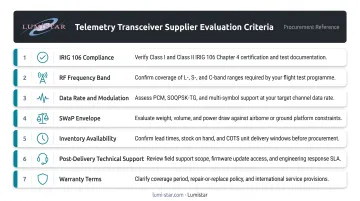
Before requesting quotes, define your requirements across these dimensions:
- IRIG 106 compliance variant — confirm Chapter 4 Class I/II, Chapter 10, and any FEC (LDPC) requirements your range mandates
- RF frequency band — S-band, L-band, and C-band are the primary IRIG allocations; confirm which your range supports and whether multi-band capability is needed
- Data rate and modulation — PCM/FM, SOQPSK-TG, and Multi-h CPM are the current ARTM tiers; verify the supplier supports the tier your program specifies
- SWaP envelope — airborne hardware has strict size, weight, and power budgets; ground hardware has more flexibility
- Inventory availability — short lead times matter when a test window is fixed
- Post-delivery technical support — can you reach an application engineer directly, or does support go through a ticket queue?
- Warranty terms — coverage depth and duration vary significantly between suppliers
Domestic Manufacture for US Defense Programs
For US defense and federal range procurements, CAGE code registration and domestic manufacture can be procurement requirements depending on contract clauses. Suppliers like Lumistar, with all products designed and manufactured in the USA (CAGE Code 718V9), can satisfy these clauses directly without additional compliance overhead.
Conclusion
For flight test and aerospace programs, finding the right telemetry transceiver comes down to two things: knowing where to look and knowing exactly what your program requires.
For real-world buyers: evaluate suppliers on demonstrated support capability and inventory depth — not just published specs. Short lead times and direct technical support can be as critical to your program as the hardware itself.
Flight test engineers sourcing telemetry hardware for aeronautical or aerospace programs can reach Lumistar's sales team at:
- Email: sales@lumistar.net
- Phone: 760-431-2181
Frequently Asked Questions
What is a telemetry transceiver?
A telemetry transceiver is a combined transmitter-receiver device that wirelessly collects measurement data from a remote platform — such as an aircraft or missile — and transmits it to a ground station for real-time monitoring. Most flight test units comply with IRIG 106 standards for interoperability across US test ranges.
What is the difference between a telemetry transmitter and a telemetry transceiver?
A transmitter is a one-way device that only sends data. A transceiver integrates both transmit and receive functions in a single unit, enabling bidirectional communication — important in flight test scenarios where uplink commands and downlink telemetry data share the same hardware.
What does SWaP mean in flight test telemetry?
SWaP stands for Size, Weight, and Power — the three physical constraints that drive hardware selection for airborne telemetry systems. Minimizing SWaP is critical on smaller test aircraft where space and power budgets are tight.
What standard governs aerospace telemetry transceivers in the US?
IRIG 106, maintained by the Range Commanders Council, governs telemetry systems at US military and federal test ranges. It defines modulation formats, frequency allocations, and data formatting requirements that hardware must meet for range interoperability.
How do I select a telemetry transceiver for a flight test program?
Start with the test range's specific IRIG 106 compliance requirements, then match the hardware to your aircraft's SWaP budget, required RF frequency band, and data rate. Factor in supplier inventory availability and post-delivery technical support — both matter when your test schedule has no flex.